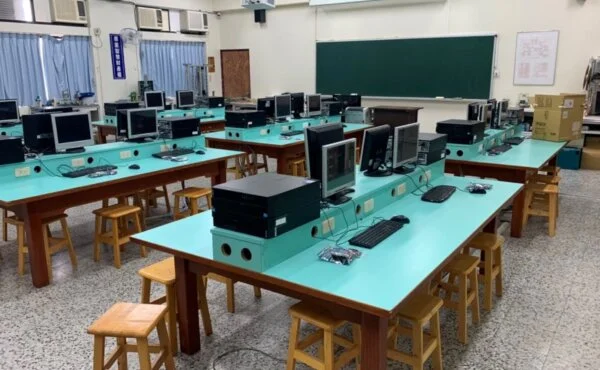
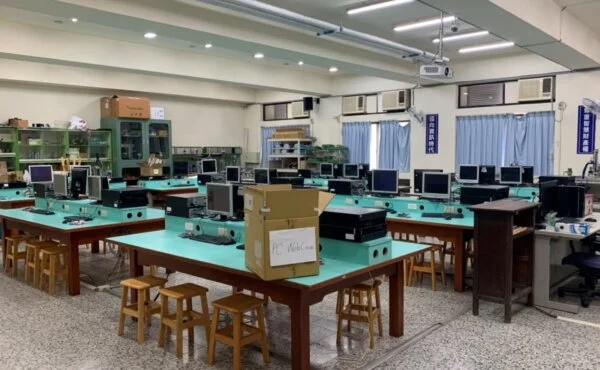
Comprehensive Building I, 4F
|
|
Course Overview
Microprocessor Applications and Laboratory
This course is designed to cultivate students' hands-on engineering skills through the use of the 8051 microcontroller as the core development platform. Students learn microcontroller programming, hardware I/O configuration, circuit design, and the planning, assembly, and installation of simple electromechanical systems. Beyond fundamental laboratory exercises, students complete independent project-based assignments to strengthen their professional knowledge and practical engineering capabilities.
Course Content:
The course utilizes an 8051 microcontroller emulator together with the Keil uVision4 Integrated Development Environment (IDE). During the early stage of the semester, students are introduced to the emulator, software operation, project creation, program flow, hardware principles, and methods for testing electronic components. Topics include the fundamentals of microprocessors, development software, basic electronic components, and component testing. For example, students learn to use a digital multimeter to test LEDs by applying forward bias, and use oscilloscopes to verify signal outputs when debugging programs. Additional laboratory exercises cover switches, matrix keypads, LEDs, and other peripheral devices. Toward the end of the course, students design and complete an individual project, reinforcing theoretical concepts while improving troubleshooting skills and engineering proficiency.
Programmable Logic Controllers and Laboratory
At the beginning of the semester, students are introduced to the fundamentals of Programmable Logic Controllers (PLCs), including their functions and industrial applications. Students are encouraged to investigate real-world PLC applications to stimulate their interest in industrial automation. Industry professionals are invited to share practical engineering experiences, enabling students to connect classroom learning with real industrial practices. The course concludes with team-based capstone projects supervised jointly by faculty members and industry mentors, making the learning process both practical and engaging.
Before the midterm examination, students build fundamental knowledge through lectures and laboratory exercises while becoming proficient in PLC programming software. Learning outcomes are evaluated through written examinations and hands-on practical assessments. After the midterm, students begin planning and developing their project assignments. Faculty members conduct periodic project reviews and consultations, with final evaluation based on oral presentations and written technical reports.
Course Content:
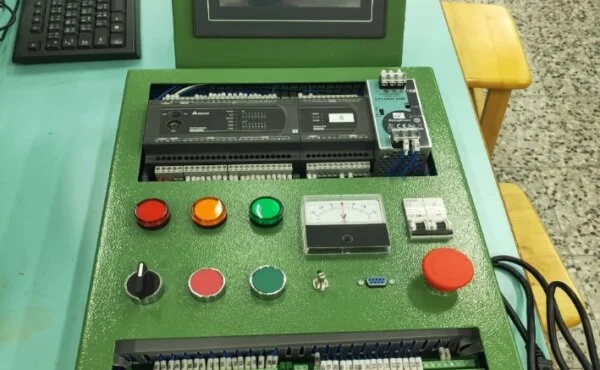
The course begins by introducing various industrial applications of PLC technology through lectures, videos, and demonstrations of outstanding student projects from previous years. Students then learn PLC programming step by step using WPLSoft programming software and dedicated training boards. Throughout the semester, supplementary instruction on electronic circuits is also provided. Major topics include ladder logic programming, basic digital I/O applications, interlock control circuits, timers and counters, DC motor and stepper motor control, sequential control using step ladder programming, and human-machine interface (HMI) applications incorporating analog-to-digital (A/D) and digital-to-analog (D/A) technologies. Upon completion of these training modules, students develop and present practical automation projects that demonstrate how PLC technology can be applied to solve real-life engineering problems.
Interface Technology
This course builds upon students' prior knowledge of microcontrollers by adopting a project-based learning approach. Engineering problems are incorporated into group projects that encourage students to develop independent thinking, analytical skills, and problem-solving abilities. By introducing authentic engineering scenarios into the classroom, students are provided with greater opportunities for creativity and innovation while gaining confidence in applying their technical knowledge to practical applications.
Course Content:
The course continues to utilize the 8051 microcontroller platform together with the Keil uVision4 development environment introduced in the previous semester. After establishing a solid foundation in embedded system development, students focus on applying their knowledge to solve real-world problems. Students analyze practical engineering challenges, determine the required system functions, and independently design and fabricate complete solutions. Throughout the project development process, instructors and teaching assistants provide step-by-step guidance covering circuit schematic design, electronic component soldering, hardware assembly, programming, debugging, and final system integration. The ultimate goal is to enable students to apply classroom knowledge to practical engineering applications while developing comprehensive system integration skills.
Courses
Microprocessor Applications and Laboratory
This course develops students' practical engineering skills using the 8051 microcontroller as the primary development platform. Students gain experience in programming, hardware interfacing, circuit design, and system integration while completing independent engineering projects.
Course Highlights:
- 8051 microcontroller architecture and programming
- Keil uVision4 development environment
- Digital I/O configuration and peripheral interfacing
- Electronic component testing and debugging
- Oscilloscope and digital multimeter applications
- Embedded system design and implementation
- Independent project development
Programmable Logic Controllers and Laboratory
This course introduces the principles and industrial applications of PLC systems while providing students with extensive hands-on programming and automation experience. Students learn through practical exercises, industry case studies, and project-based learning under the guidance of faculty members and industry experts.
Course Highlights:
- PLC fundamentals and industrial automation
- Ladder logic programming using WPLSoft
- Digital I/O control
- Interlock circuits
- Timers and counters
- DC motor and stepper motor control
- Sequential control programming
- Human-Machine Interface (HMI) applications
- Capstone project development and presentation
Interface Technology
This project-oriented course emphasizes system integration and practical engineering applications. Students apply embedded system knowledge to solve real-world engineering problems by designing, constructing, programming, and testing complete electronic systems.
Course Highlights:
- Embedded system integration
- Circuit schematic design
- Electronic component soldering
- Hardware assembly and debugging
- Microcontroller programming
- Project planning and implementation
- Real-world engineering applications
Laboratory Equipment
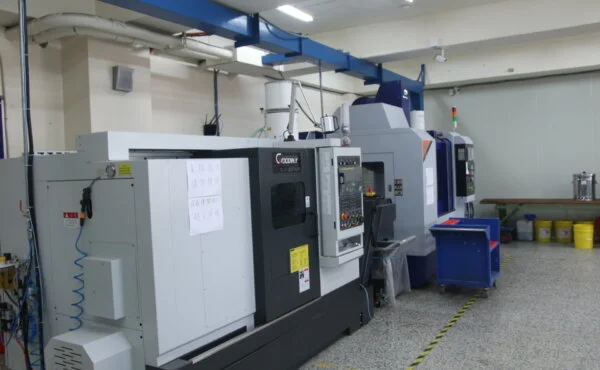
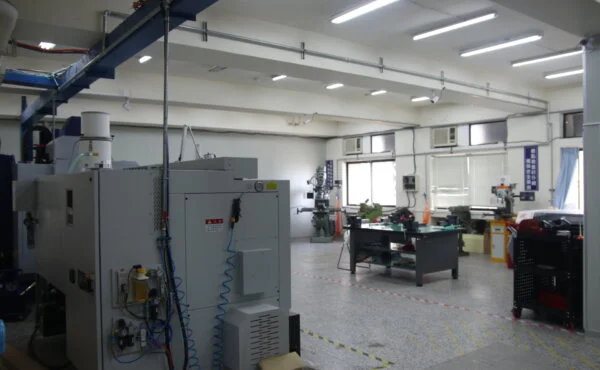
General Teaching Equipment
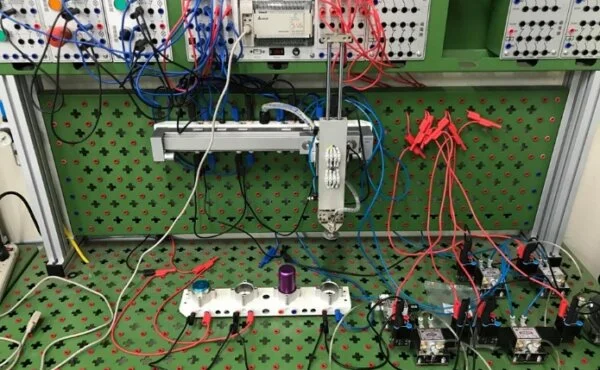
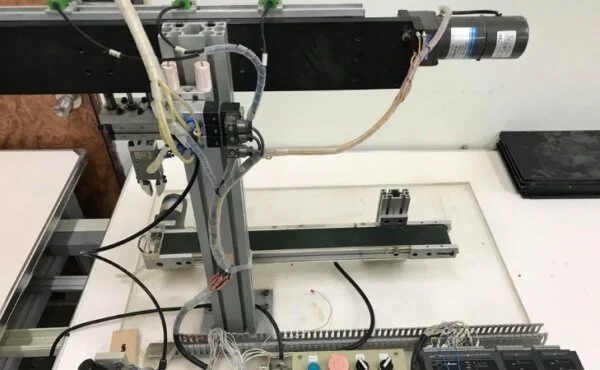
Programmable Logic Controllers and Laboratory
Microprocessor Applications and Laboratory
Interface Technology
|
|