

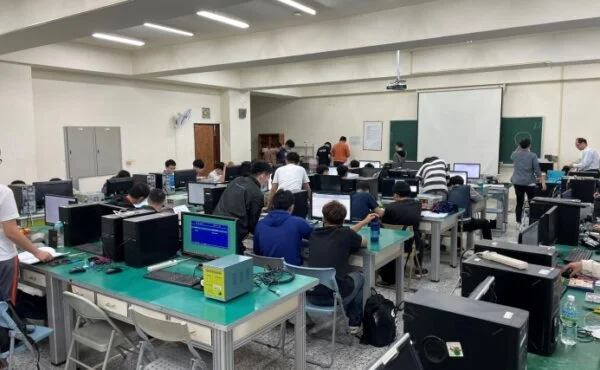
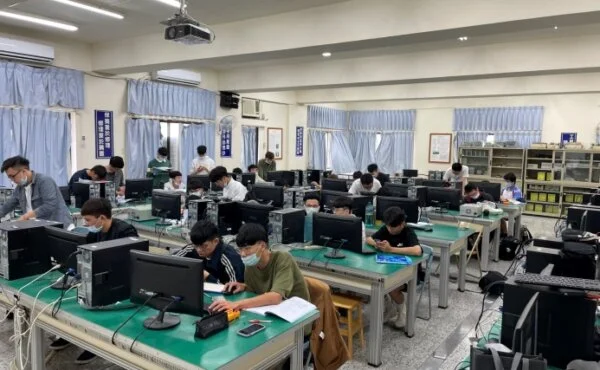
1st Integrated Building, 5F
|
|
Course Description
Automatic Control Laboratory
This laboratory course complements the Automatic Control course by verifying theoretical concepts through experiments. Students become familiar with industrial control applications while using MATLAB/Simulink to simulate dynamic systems and perform real-time control. Hands-on practice reinforces fundamental automatic control principles, including first-order and second-order system responses, steady-state error analysis, PID controller design, and controller implementation.
Digital Control
This course introduces the theoretical foundations, analysis, and design methods of digital control systems. It covers discrete-time systems, sampled-data systems, system modeling, analysis, and the design of discrete closed-loop control systems.
Course Topics:
- Discrete-Time Systems and Z-Transform
- Sampling and Reconstruction
- Open-Loop Discrete-Time Systems
- Closed-Loop Control Systems
- Time Response Characteristics
- Stability Analysis Techniques
Engineering Applications of MATLAB
This course introduces MATLAB programming techniques and numerical computation methods for engineering applications while strengthening students' programming skills and computational thinking.
Course Topics:
- Introduction to MATLAB and Basic Operations
- Basic MATLAB Computation and Numerical Analysis
- Common Mathematical Functions and Syntax
- Matrix Operations
- Data Visualization and Plotting
- Program Flow Control
- Solving Algebraic Equations
- Numerical Calculus
- Solving Differential Equations
- Symbolic Mathematics Toolbox
- Advanced MATLAB Applications – Digital Image Processing
- Advanced MATLAB Applications – Deep Learning
Embedded Systems
This course provides students with comprehensive knowledge of embedded systems and domain-specific applications. It covers both theoretical and practical aspects of embedded system development, including software-hardware integration, system design, integration, verification, and project management.
Image Processing
This course introduces the fundamental theories of digital image processing, including image sampling and quantization, color representation, point processing, image segmentation, morphological operations, linear image filtering, correlation, feature extraction, and pattern recognition. Students implement image processing algorithms using MATLAB and Python to develop practical programming skills.
Courses
Automatic Control Experiment
This course is an experimental course set up in conjunction with automatic control. Its purpose is to use experiments to verify the theories learned in the automatic control course, so that students can understand the various applications of control in industry.
Use MATLAB/Simulink software to simulate and analyze the dynamic system and carry out real-time control. The basic theory of automatic control is verified by hands-on operation. Familiar with the time response behavior of the first-order system, the time response characteristics of the second-order system, analyze the steady-state error of different types of systems, learn the design of the PID controller, and apply it to the control of the first-order system and the second-order system.
Digital Control
This course mainly explains the theoretical basis, analysis, and design methods of digital control systems, discusses the system modeling and analysis of discrete-time and sampled-data systems, and analyzes and designs discrete closed-loop control systems.
Course contents:
- Discrete-time system and Z-transform
- Sampling and reconstruction
- Open-loop discrete-time system
- Closed-loop system
- Time response characteristics of the system
- Technologies of stability analysis
MATLAB Application Courses in Engineering
Learn the operating skills and programming of Matlab software, strengthen programming skills and concepts, and apply numerical calculation problems in engineering.
Course contents:
- Introduction to Matlab software and basic operating skills
- Matlab basic operations: basic numerical analysis
- Matlab commonly used mathematical functions and their syntax
Embedded System
This course provides a thorough understanding of Embedded Systems and specialization in a specific area covering theoretical and practical aspects of embedded systems development. Students gain engineering skills and learn integration of software and hardware, system design, integration, verification, and management.
Application for Digital Image Processing
This course’s emphasis is on the general principles of image processing. Image sampling and quantization, color, point operations, segmentation, morphological image processing, linear image filtering and correlation, feature extraction, and recognition tasks. Students learn to apply the material by implementing and investigating image processing algorithms in Matlab and Python.
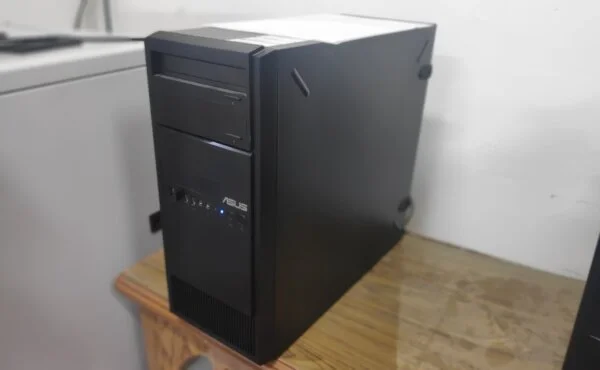
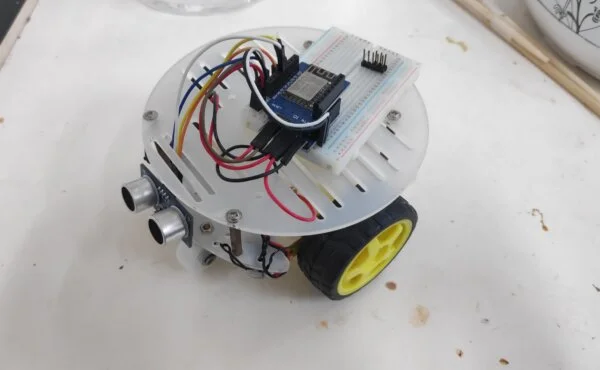
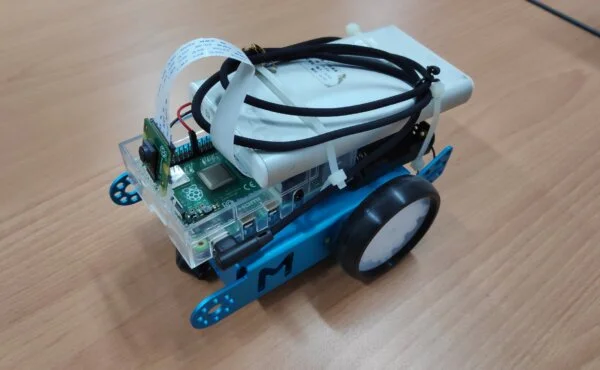
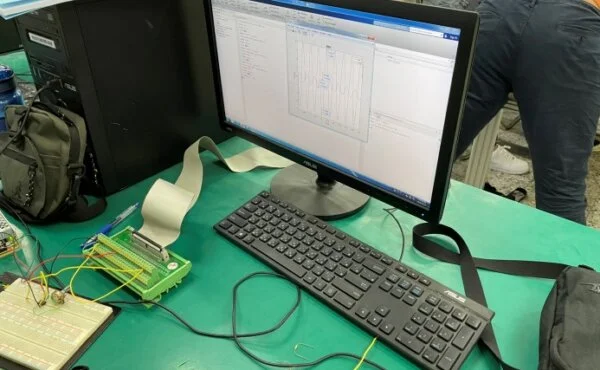
Laboratory Equipment
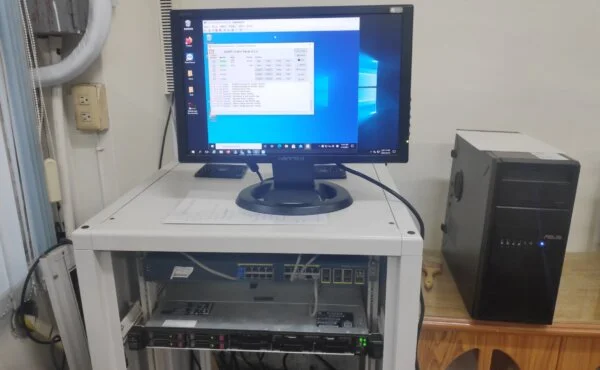
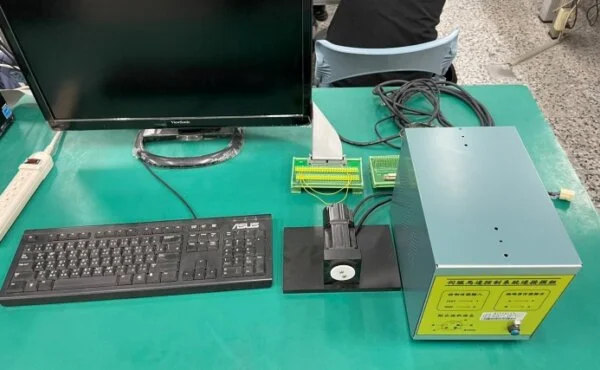
Basic Teaching Equipment
|
|